
It's Not Just How Much Protein: Understanding Why Protein Quality Matters
In short: The number of grams on a protein label is only half the story. What matters is how much of that protein your body can digest, absorb and use, and whether it carries the essential amino acids that muscle repair needs. Experts measure this with a score called DIAAS, where 100 or more counts as excellent quality. On that scale whey protein scores 125 to 133, soy protein 98, pea protein 73 and wheat 54. Quality matters most when appetite is small or needs are high.
Sources for this summary: the DIAAS method and score bands, FAO Expert Consultation, Food and Nutrition Paper 92, 2013; the scores quoted, Mathai, Liu & Stein, British Journal of Nutrition 2017.
Walk down any supplement aisle and the message is the same: more protein, bigger number, better product.
It’s a fair thing to look at, but it’s incomplete. Two products can both promise 25 g of protein, but your body may end up using very different amounts of them. That difference is due to their protein quality, and for anyone who is older, unwell or eating less than they should, it matters more than the headline number.
What "protein quality" actually means
Protein isn’t one single thing. It’s a chain made of about twenty amino acids, nine of which your body can’t make for itself and has to get from food. Those nine are the essential ones.
Protein quality comes down to three simple questions.
Does it contain all nine essential amino acids, in useful amounts? Milk, eggs, meat, fish and soya do. Most other plant proteins are short of one or two. Wheat, for example, is low in an amino acid called lysine, while dal is low in methionine.
Can your body actually absorb it? This is protein digestibility, and it varies a lot. Some plant proteins come wrapped in fibre and other compounds that may reduce protein digestibility and limit the availability of amino acids. Does it carry enough leucine? Leucine is the amino acid that stimulates muscle repair ^[3, 6]^. It is particularly relevant to muscle response to dietary protein. How quality is measured: PDCAAS and DIAAS
For years, protein quality was scored using PDCAAS. It worked, but it had a flaw: scores were capped at 1.0, so every good protein looked the same, and digestion was measured from what came out in the stool, which overstates what the body absorbed.
In 2013, an expert group at the UN’s Food and Agriculture Organization recommended a better method: DIAAS, the Digestible Indispensable Amino Acid Score ^[1]^. It measures each essential amino acid at the point where absorption really happens, in the small intestine, and it isn’t capped, so genuinely better proteins can score above 100.
The bands are easy to remember:
- 100 or more: excellent quality protein
- 75 to 99: good quality protein
- Below 75: no protein quality claim
In one widely cited study, whey DIAAS came out at 125 for whey protein isolate and 133 for whey protein concentrate, with milk protein at 141. Soy protein isolate scored 98, pea protein 73 and wheat 54 ^[2]^. Dairy proteins sit at the top because they supply all the essential amino acids and are absorbed easily.
So “30 g of protein” from wheat-based sources and 30 g from whey are not the same 30 g. This is the short answer to why protein quality and the DIAAS score matter at all.
Why quality matters more as we get older
Here’s the part that often gets missed.
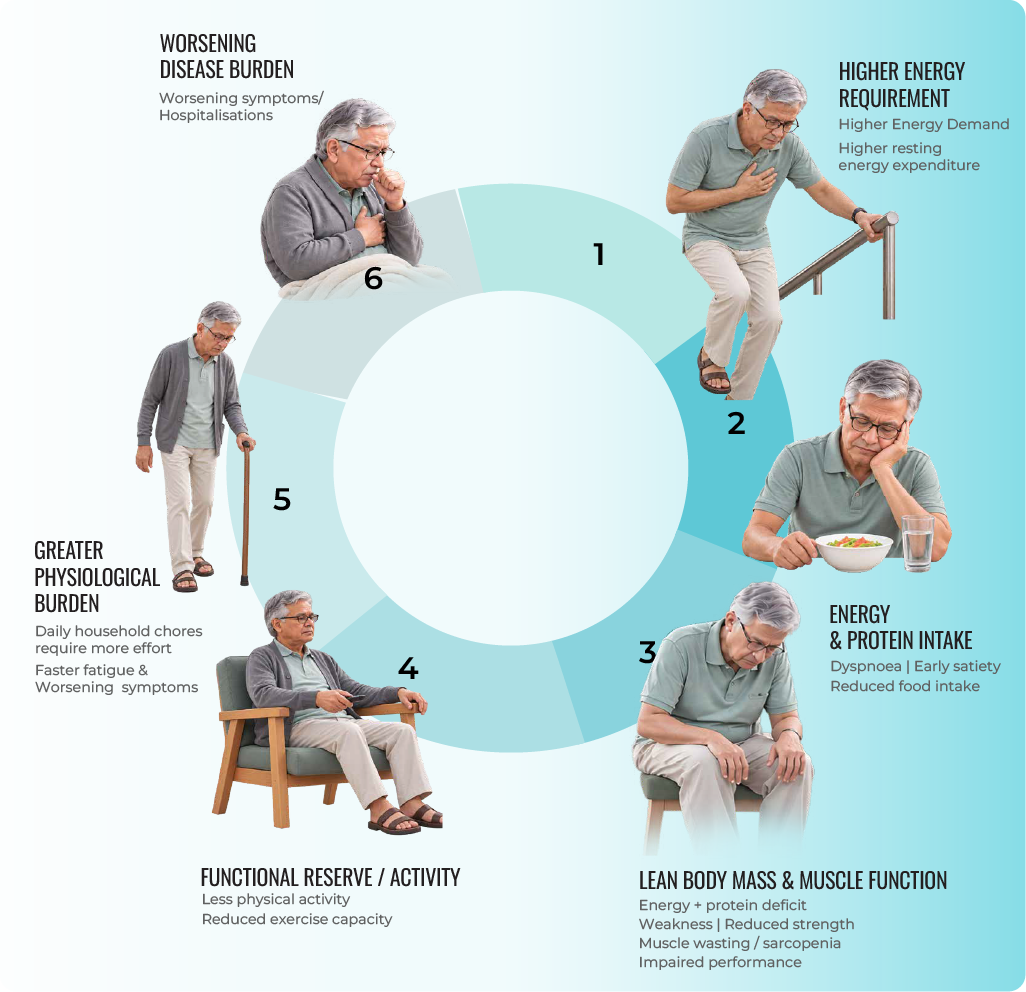
A young body generally has a greater muscle protein synthesis response to dietary protein than older adults. With age, muscle can become less responsive to dietary protein ^[8]^. The same protein produces a smaller stimulus to muscle repair.Experts groups therefore suggest older adults aim higher than the standard adult recommendation, around 1.0 to 1.2 g of protein per kg of body weight a day, and 1.2 to 1.5 g/kg when they are ill or recovering [9]. To get past the weaker response, an older body also needs a bigger, better-quality helping of protein at a sitting. In one study, older men needed roughly 0.4 g of protein per kg of body weight in a meal to get the strongest response, noticeably more than younger men ^[7]^. For a 60 kg person, that’s about 24 g of good protein at one meal, which is a decent plate of food when appetite is already small.
Two practical conclusions follow. First, aim for a protein source at every meal, roughly 25 to 30 g each ^[10]^. Second, when the amount you can eat is limited, choose a protein source that provides high-quality protein.
Whey vs casein, briefly
Milk carries two proteins. Whey is digested fast and pushes amino acids into the blood in a sharp burst. Casein is relatively slower and steadier ^[4]^. For older adults, that quick burst seems to matter: whey produced more muscle building protein after a meal than the same amount of casein in a study of older men ^[5]^. Whey is also naturally rich in leucine ^[3]^. Both are good; but whey has the edge when muscle is the goal.
Does this mean plant proteins are no good?
Not at all, and this is worth saying clearly in an Indian context, where most plates are plant-based.
Single plant proteins score lower on their own. Put them together and the picture changes, because one food’s weak point is another’s strength. Dal is low in methionine but rich in lysine. Rice and wheat are the other way around. Eat them in the same meal, as most Indian homes already do, and the combination covers what each one lacks.
A few practical ways to lift the quality of a vegetarian plate:
- Keep the classic pairings: dal with rice, rajma with roti, idli with sambar, khichdi with curd.
- Add dairy where you can: curd, paneer, buttermilk or a glass of milk with a meal.
- Use soya, which is the strongest plant protein on the scale, as chunks, tofu or soya flour mixed into atta.
- Add nuts, seeds and sattu to raise both protein and energy in small portions.
The catch is volume. One katori of cooked dal gives roughly 7 g of protein, a glass of milk about 6 g and 100 g of paneer about 18 g [11]. To match a paneer portion with dal alone, you need a good deal more on the plate; that’s easy at 35 and much harder at 75, or when someone is unwell.
How to judge a protein product
When you’re picking a product rather than a food, the label tells you more than the front of the pack. Check the protein per serving rather than per 100 g, see where the protein comes from, and look for a quality score, such as DIASS, if given. Check the calories too, since protein without enough energy might get used up as fuel instead of rebuilding muscle. And be honest about the serving: the best product is the one that gets consumed.
For people who are older or recovering, this often points towards a high DIAAS whey protein supplement in a small, easy format rather than a large shake.
Compact Emprana was built on that thinking. Its protein is 61% whey, and the protein blend has a DIAAS of 109 (company data), which sits in the excellent quality band. Each 50 g sachet gives 18 g of protein and 285 kcal as a ready to eat paste, with nothing to mix. It is a Food for Special Dietary Use, meant for people with low muscle mass, severe malnutrition or low BMI, and should be taken on the advice of a doctor, dietitian or nutritionist. It contains peanut, milk and soy.
Frequently asked questions
What is a good DIAAS score?
A DIAAS of 100 or more is excellent quality, 75 to 99 is good, and below 75 doesn’t qualify for a protein quality claim under FAO guidance ^[1]^.
Is whey better than plant protein for older adults?
For muscle, usually yes, because whey is absorbed quickly and is rich in leucine. Plant proteins still work well when combined, but you generally need a larger portion to get the same effect.
How much protein should one meal have?
Roughly 25 to 30 g for an older adult: a katori of dal with curd and an egg, or one good serving of paneer, fish or chicken.
Does a protein powder for old people actually help?
It can, when food alone isn’t enough. Look for good-quality protein and enough calories with it, in a serving small enough to finish, and check with a doctor or dietitian first, especially if there’s kidney disease.
What is Emprana?
Compact Emprana is a ready to eat nutritional paste from Compact Food Solutions. Each 50 g sachet carries 285 kcal and 18 g of mostly whey protein, and it’s meant as nutritional support for strength and recovery, taken on medical advice.
This article is for general information and doesn’t replace medical advice. Please speak with your doctor or dietitian before starting any protein supplement.
References
- FAO. Dietary protein quality evaluation in human nutrition: report of an FAO Expert Consultation. FAO Food Nutr Pap. 2013;92.
- Mathai JK, Liu Y, Stein HH. Values for digestible indispensable amino acid scores (DIAAS) for some dairy and plant proteins may better describe protein quality than values calculated using the concept for protein digestibility-corrected amino acid scores (PDCAAS). Br J Nutr. 2017;117(4):490–499.
- Devries MC, Phillips SM. Supplemental protein in support of muscle mass and health: advantage whey. J Food Sci. 2015;80(Suppl 1):A8–A15.
- Boirie Y, Dangin M, Gachon P, et al. Slow and fast dietary proteins differently modulate postprandial protein accretion. Proc Natl Acad Sci USA. 1997;94(26):14930–14935.
- Pennings B, Boirie Y, Senden JM, et al. Whey protein stimulates postprandial muscle protein accretion more effectively than do casein and casein hydrolysate in older men. Am J Clin Nutr. 2011;93(5):997–1005.
- Katsanos CS, Kobayashi H, Sheffield-Moore M, Aarsland A, Wolfe RR. A high proportion of leucine is required for optimal stimulation of the rate of muscle protein synthesis by essential amino acids in the elderly. Am J Physiol Endocrinol Metab. 2006;291(2):E381–E387.
- Moore DR, Churchward-Venne TA, Witard O, et al. Protein ingestion to stimulate myofibrillar protein synthesis requires greater relative protein intakes in healthy older versus younger men. J Gerontol A Biol Sci Med Sci. 2015;70(1):57–62.
- Cuthbertson D, Smith K, Babraj J, et al. Anabolic signaling deficits underlie amino acid resistance of wasting, aging muscle. FASEB J. 2005;19(3):422–424.
- Bauer J, Biolo G, Cederholm T, et al. Evidence-based recommendations for optimal dietary protein intake in older people: a position paper from the PROT-AGE Study Group. J Am Med Dir Assoc. 2013;14(8):542–559.
- Paddon-Jones D, Rasmussen BB. Dietary protein recommendations and the prevention of sarcopenia. Curr Opin Clin Nutr Metab Care. 2009;12(1):86–90.
- Longvah T, Ananthan R, Bhaskarachary K, Venkaiah K. Indian Food Composition Tables 2017. National Institute of Nutrition (ICMR), Hyderabad.