
Energy-Dense High-Protein Nutrition: What Is EDHP and Why Does It Matter?
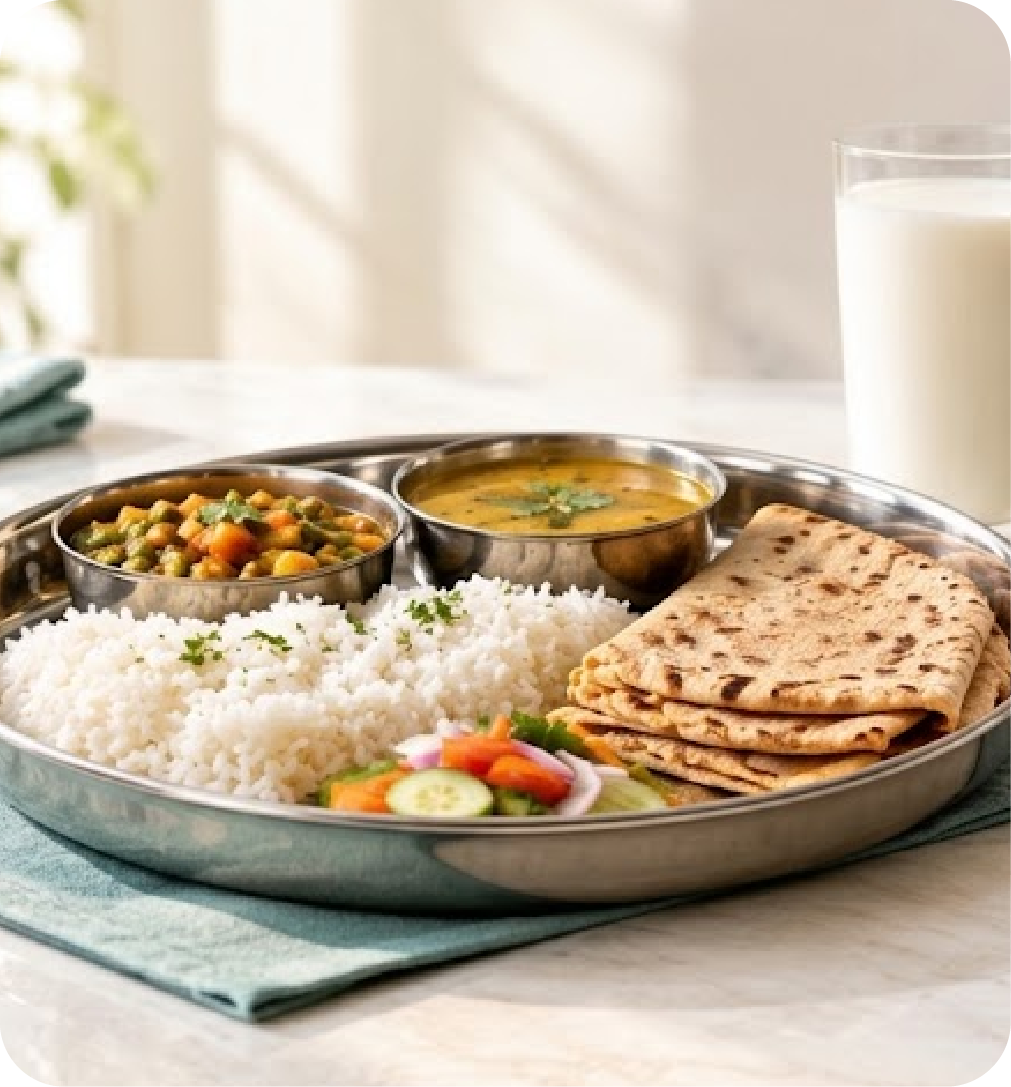
Walk into any pharmacy or scroll any shopping app and you’ll find a wall of protein. Protein powders, protein bars, protein biscuits, even protein chips. The number on the front keeps getting bigger: 20 g, 25 g, 30 g.
For a young person at the gym, that’s fine. But for a 70-year-old recovering from pneumonia, or an elderly parent who gets tired halfway through lunch, the question isn’t really “how many grams of protein?” It’s harder than that. Can they eat enough to be properly nourished, and will their body use it to rebuild strength?
That’s the problem energy-dense high-protein (EDHP) nutrition is built to solve. Here’s what EDHP means, why protein on its own often isn’t enough, and how to differentiate or identify good protein from average protein.
What is energy-dense high-protein nutrition?
Let’s break the name down.
Energy-dense means a food carries a lot of calories in a small amount. A bowl of thin soup gives very little. A spoon of peanut butter gives a lot.
High-protein means a good share of those calories comes from protein, and ideally from high-quality protein that the body can digest and use well.
Put together, EDHP nutrition means food that carries a useful amount of both energy and protein in a small serving that’s easy to finish. It is meant to add in between meals for people whose usual diet isn’t keeping up with what their body needs.
It’s different from a regular protein powder, which usually focuses on protein alone and has to be mixed and prepared into large volume drink. And it’s different from a lot of general nutritional drinks, which may carry decent calories but need a full glass (or two) to get there. It’s also why some specialised products now come as a ready to eat paste rather than a drink: no shaker, no measuring, no mixing with water or milk.
Why "more protein" is not always the answer
Protein is the building block for muscle. But the body’s first priority is energy. If you’re not eating enough calories overall, the body might take the protein you eat and burn them for fuel instead of using them to build or repair tissue [1, 2]. It’s a bit like buying bricks to build a wall and then burning them to keep warm.
So a person who eats very little but adds a scoop of protein powder to their tea may not get much benefit. Protein needs an energy escort. That’s why guidance for people who are unwell sets both: enough calories, and about 1.2 to 1.5 g of protein per kg of body weight a day for those at nutritional risk [1, 3].
The three-dimensional nutrition problem
Most protein marketing talks about one number. We think it’s more useful to look at three.
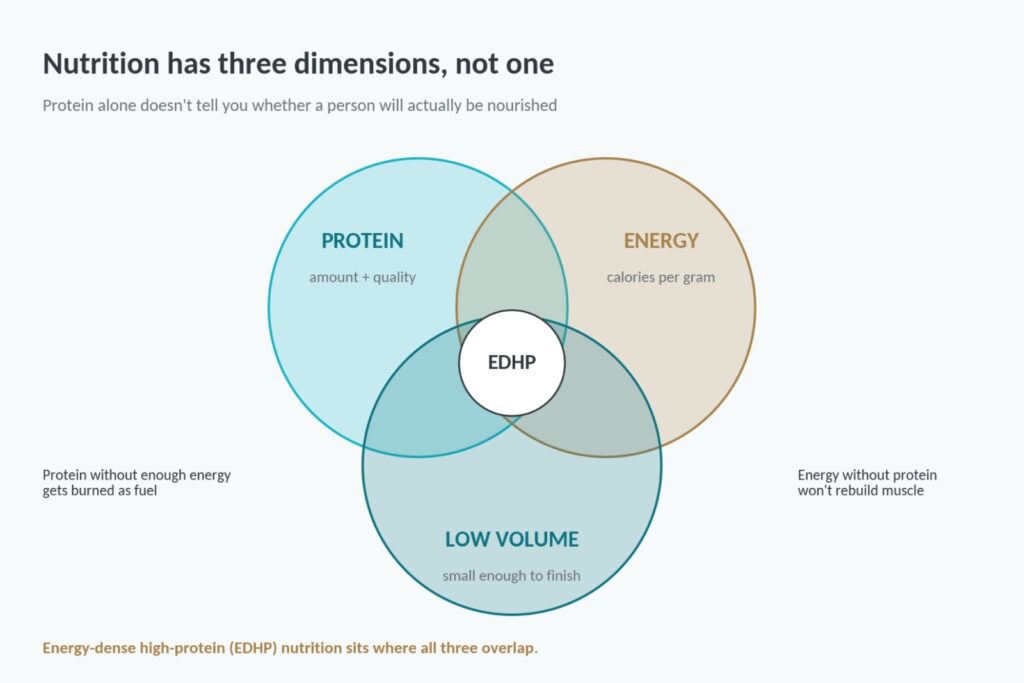
- Protein (amount and quality). How much protein, and how good is it?
- Energy density. Are there enough calories to spare that protein for muscle?
- Volume. Is the serving small enough that the person will actually finish it?
Why small, concentrated meals are easier when appetite is low & you cannot eat much in one go
If you’ve ever sat with an unwell parent at mealtime, you’ll know that eating can be tiring work.
A full stomach may press upwards and makes breathing feel tighter, increasing the sensation of breathlessness. So people who get breathless often stop after a few mouthfuls. Illness, medicines and low mood shrink appetite further. Smaller meals, more often, are usually easier to manage [4], but smaller meals mean less nutrition each time, unless every bite carries more.
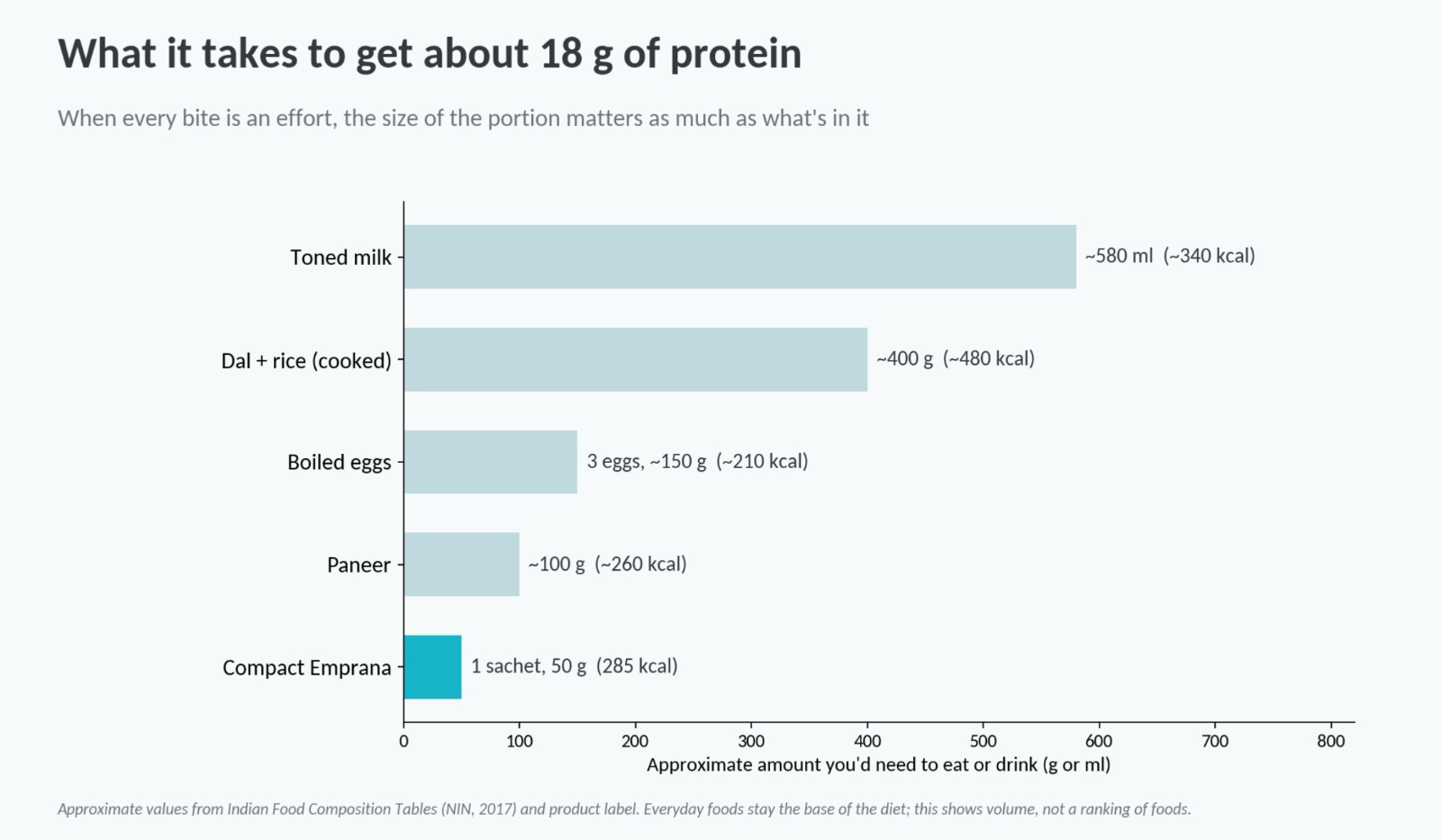
This is where low volume nutrition comes in. Look at roughly how much food it takes to get about 18 grams of protein [12]:
Whey vs casein: does the type of protein matter?

Milk contains two main types of protein: whey (about 20%) and casein (about 80%). Both are complete, high-quality proteins. But they behave differently once you eat them.
Whey is a “fast” protein. It’s digested quickly and pushes amino acids (the building blocks of protein) into the blood in a sharp burst. Casein is slower and gentler [5].
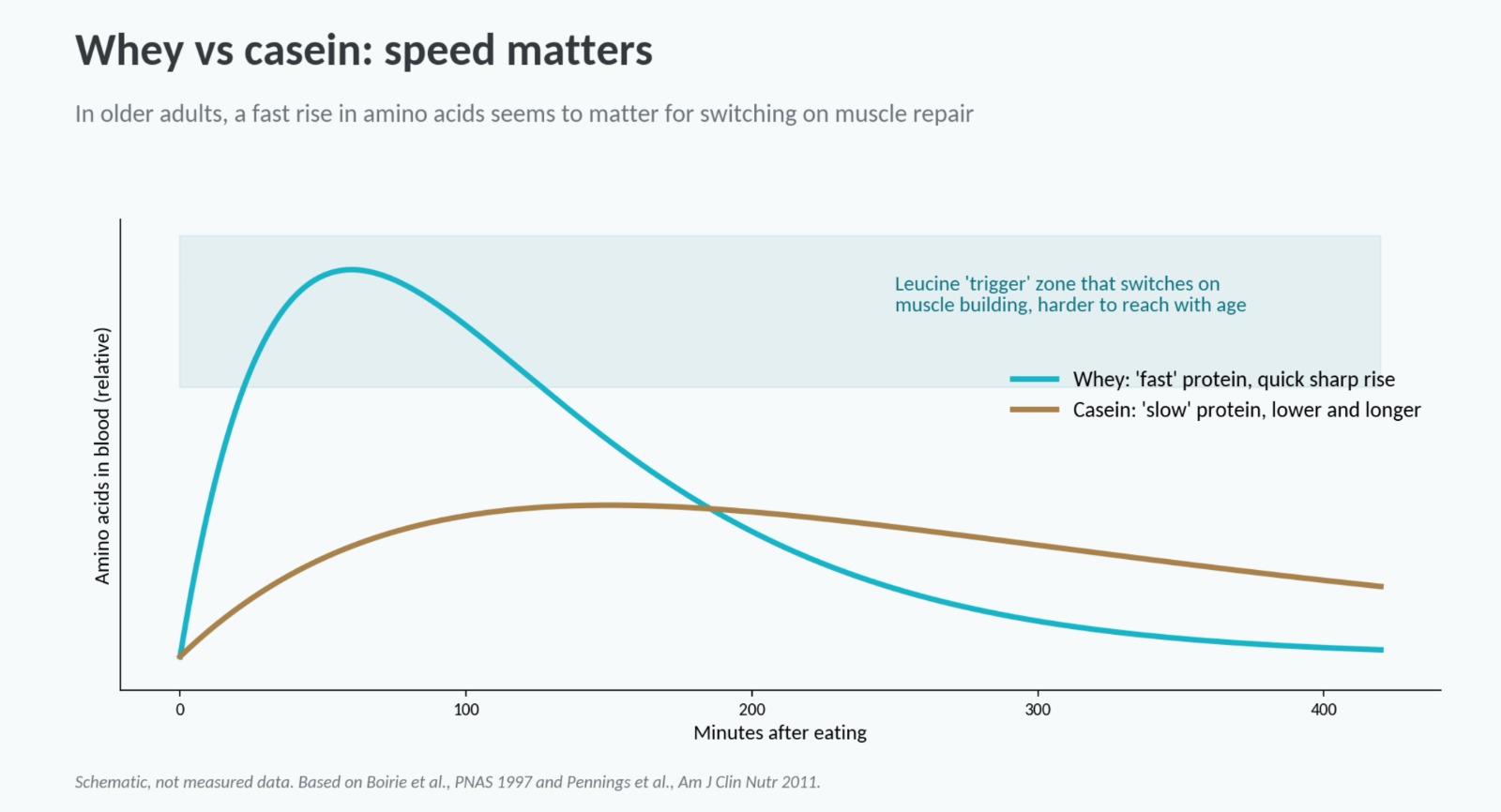
Speed matters because older muscle needs a stronger nudge to start repairing itself [6]. Whey gives that nudge better than casein in older adults [7], partly because it is rich in leucine, the amino acid that acts like an on-switch for muscle building [8, 9]. Both are good proteins. For older adults, whey has the edge.
How do you judge protein quality?
“30 g protein” on a label tells you the amount. It doesn’t tell you how much of it your body can actually absorb and whether it provides all the essential amino acids that the body needs and cannot be manufactured by the body itself. That’s what protein quality scores are for, and it’s why protein quality and the DIAAS score matter.
DIAAS, in plain terms
An older score called PDCAAS has been used for years, but it can’t tell the quality of the protein and how well it is digested. So in 2013 experts at the UN’s Food and Agriculture Organization recommended DIAAS (Digestible Indispensable Amino Acid Score), which measures what the body truly absorbs [10]. The higher the number, the better is the quality of the protein.
The FAO also suggested simple cut-offs:
- DIAAS 100 or above: excellent-quality protein
- DIAAS 75 to 99: good-quality protein
- DIAAS below 75: no protein quality claim
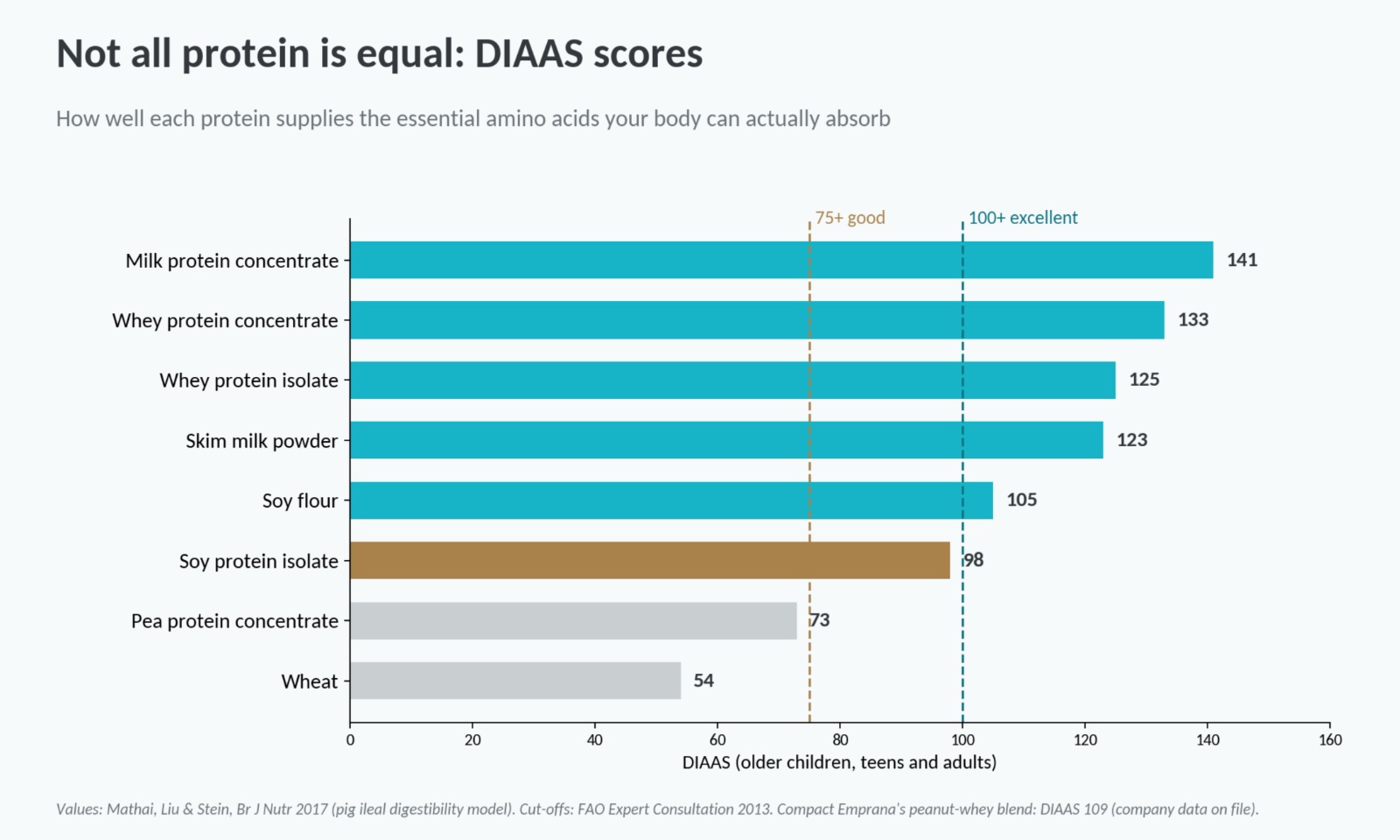
In one widely cited study, whey DIAAS came out at 125 for whey protein isolate and 133 for whey protein concentrate, against 98 for soy, 73 for pea and 54 for wheat [11]. Dairy proteins sit at the top. That’s the thinking behind a high DIAAS whey protein supplement: fewer grams needed for the same job.
Emprana: what is energy-dense high-protein nutrition, and who may need it?
Compact Emprana was developed as an EDHP nutritional paste, drawing on over 75 years of specialised nutrition experience at Compact Food Solutions, a Norwegian company founded in Bergen in 1948 and known for its work on ready-to-use therapeutic foods. What it is, in plain terms: a specialised nutritional paste that is high in good-quality protein and low in carbohydrate, made as nutritional support for strength and recovery.
Here’s what a single 50 g sachet of Emprana brings to the three dimensions we talked about:
What matters | What Emprana gives per 50 g sachet |
|---|---|
Energy density | 285 kcal (5.7 kcal per gram) |
Protein amount | 18 g |
Protein quality | 61% of protein from whey; protein blend DIAAS 109 (company data) |
Carbohydrate load | 9.8 g, about 14% of energy; low glycaemic index (~41, company data) |
Volume and effort | 50 g, ready to eat straight from the sachet. No mixing with water or milk. |
Keeping carbohydrate low in each serving means the sachet stays small and the energy comes mostly from fat and protein.
Who may benefit from EDHP nutrition?
EDHP products like Emprana are meant for people whose regular diet isn’t meeting their energy and protein needs. That often includes:
- Older adults with low muscle mass, poor appetite or frailty
- People with low BMI or who are malnourished
- People recovering from a hospital serious illness or a flare-up of an existing condition
Emprana is a Food for Special Dietary Use and should be taken on the advice of a physician, certified dietitian or nutritionist. The usual plan is two sachets a day between meals, so it adds to food rather than replacing it. It contains peanut, milk and soy, so it isn’t suitable for anyone allergic to these.
Frequently asked questions
What does EDHP stand for?
EDHP stands for energy-dense high-protein. It describes nutrition that delivers a lot of energy and good-quality protein in a small portion.
Which is better for older adults, whey or casein?
Both are high-quality. Whey is digested faster and is richer in leucine, which may give older muscles a stronger signal to rebuild.
Can I take Emprana without a doctor’s advice?
Emprana is a Food for Special Dietary Use and is meant to be taken under the guidance of a doctor, dietitian or nutritionist, who can check whether it fits your needs.
What is Emprana?
Compact Emprana is a ready to eat nutritional paste from Compact Food Solutions, sold in 50 g sachets. Each sachet carries 285 kcal and 18 g of protein, mostly whey, with a low carbohydrate load. It’s a Food for Special Dietary Use, meant as nutritional support for strength and recovery in people who aren’t meeting their protein and energy needs through food alone.
Are there high calorie supplements without mixing water or milk?
Yes. Ready to eat formats, such as a paste in a sachet, are made exactly for this. A no mix, ready to eat protein option helps when someone is too tired to prepare a drink, when there’s no clean water handy while travelling, or when a full glass is simply too much to finish.
References
- Collins PF, Yang IA, Chang YC, Vaughan A. Nutritional support in chronic obstructive pulmonary disease (COPD): an evidence update. J Thorac Dis. 2019;11(Suppl 17):S2230–S2237.
- Schols AM, Ferreira IM, Franssen FM, et al. Nutritional assessment and therapy in COPD: a European Respiratory Society statement. Eur Respir J. 2014;44(6):1504–1520.
- Hegelund MH, Ryrsø CK, Ritz C, et al. Multidimensional individualized nutritional therapy for individuals with severe chronic obstructive pulmonary disease: study protocol for a registry-based randomized controlled trial. Trials. 2023;24(1):86.
- American Lung Association. Nutrition and COPD. lung.org (accessed September 2026).
- Boirie Y, Dangin M, Gachon P, et al. Slow and fast dietary proteins differently modulate postprandial protein accretion. Proc Natl Acad Sci USA. 1997;94(26):14930–14935.
- Cuthbertson D, Smith K, Babraj J, et al. Anabolic signaling deficits underlie amino acid resistance of wasting, aging muscle. FASEB J. 2005;19(3):422–424.
- Pennings B, Boirie Y, Senden JM, et al. Whey protein stimulates postprandial muscle protein accretion more effectively than do casein and casein hydrolysate in older men. Am J Clin Nutr. 2011;93(5):997–1005.
- Katsanos CS, Kobayashi H, Sheffield-Moore M, Aarsland A, Wolfe RR. A high proportion of leucine is required for optimal stimulation of the rate of muscle protein synthesis by essential amino acids in the elderly. Am J Physiol Endocrinol Metab. 2006;291(2):E381–E387.
- Devries MC, Phillips SM. Supplemental protein in support of muscle mass and health: advantage whey. J Food Sci. 2015;80(Suppl 1):A8–A15.
- FAO. Dietary protein quality evaluation in human nutrition: report of an FAO Expert Consultation. FAO Food Nutr Pap. 2013;92.
- Mathai JK, Liu Y, Stein HH. Values for digestible indispensable amino acid scores (DIAAS) for some dairy and plant proteins may better describe protein quality than values calculated using the concept for protein digestibility-corrected amino acid scores (PDCAAS). Br J Nutr. 2017;117(4):490–499.
- Longvah T, Ananthan R, Bhaskarachary K, Venkaiah K. Indian Food Composition Tables 2017. National Institute of Nutrition (ICMR), Hyderabad.